



Remote access trojans
Remote Access Trojan
(RAT) Hijack controls
Stop all unauthorized remote control of mobile devices by
detecting malicious screen sharing and accessibility service abuse

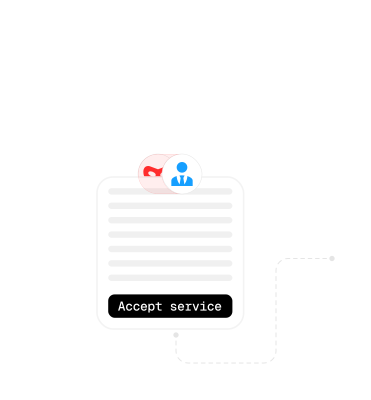
Malicious Accessibility Permissions
Fraudulent support apps request accessibility
services under false pretenses like screen reader and then overlay phishing screens
services under false pretenses like screen reader and then overlay phishing screens
Command-and-Control Channels
RATs use encrypted messaging platforms (Telegram bots) or compromised legitimate apps to receive instructions and exfiltrate
data stealthily
data stealthily
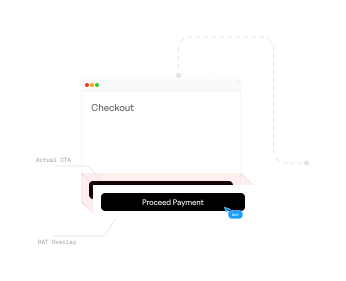
Screen Overlays & UI Manipulation
Sophisticated trojans inject transparent overlays that mislead users into approving transactions or divulging credentials without detection
Silent Functions
RATs hide their components in system directories, evade static analysis with dynamic code loading, and maintain persistence across reboots to facilitate prolonged attacks.

Here's how Sense
prevents RAT scams ...
prevents RAT scams ...
Detect Permission Abuse
Suspicious combinations—such as screen-capture with input control—
are automatically revoked and logged
are automatically revoked and logged
Interception of Endpoints
Any attempt to connect to known or anomalous endpoints triggers
immediate blocking and session isolation
immediate blocking and session isolation
UI Integrity Validation
Unauthorized overlays or injected elements are detected
in real time, and the session is locked down
in real time, and the session is locked down
Behavioral Anomaly Blocking
Detect non-human or remote-driven input. Upon anomaly detection,
Sense terminates the session and alerts security teams
Sense terminates the session and alerts security teams